Production readiness for AI-built apps

From AI prototype to a product that holds up.

You built it with Cursor, Lovable, Bolt, v0, or Claude Code, and the demo works. We check what's underneath, then make the app secure, stable, and ready to run.

Reports and communication in German, English, and Turkish.

Audit report · example

Ref. A-0427 · Next.js + Supabase

  1. Row-level security off on invoices Critical
  2. Service key in git history High
  3. Admin route without auth check High
  4. No rate limit on login Medium

Fix plan ranked by risk. Scope agreed before work starts.
Detail 1invoices.ts
  const { data } = await db-   .from("invoices").select("*")+   .from("invoices").select("id,total,status")+   .eq("user_id", session.user.id)

Built by us, running live

Most of our work is confidential. Here are two projects we can show: a product of our own and a client project we name with permission.

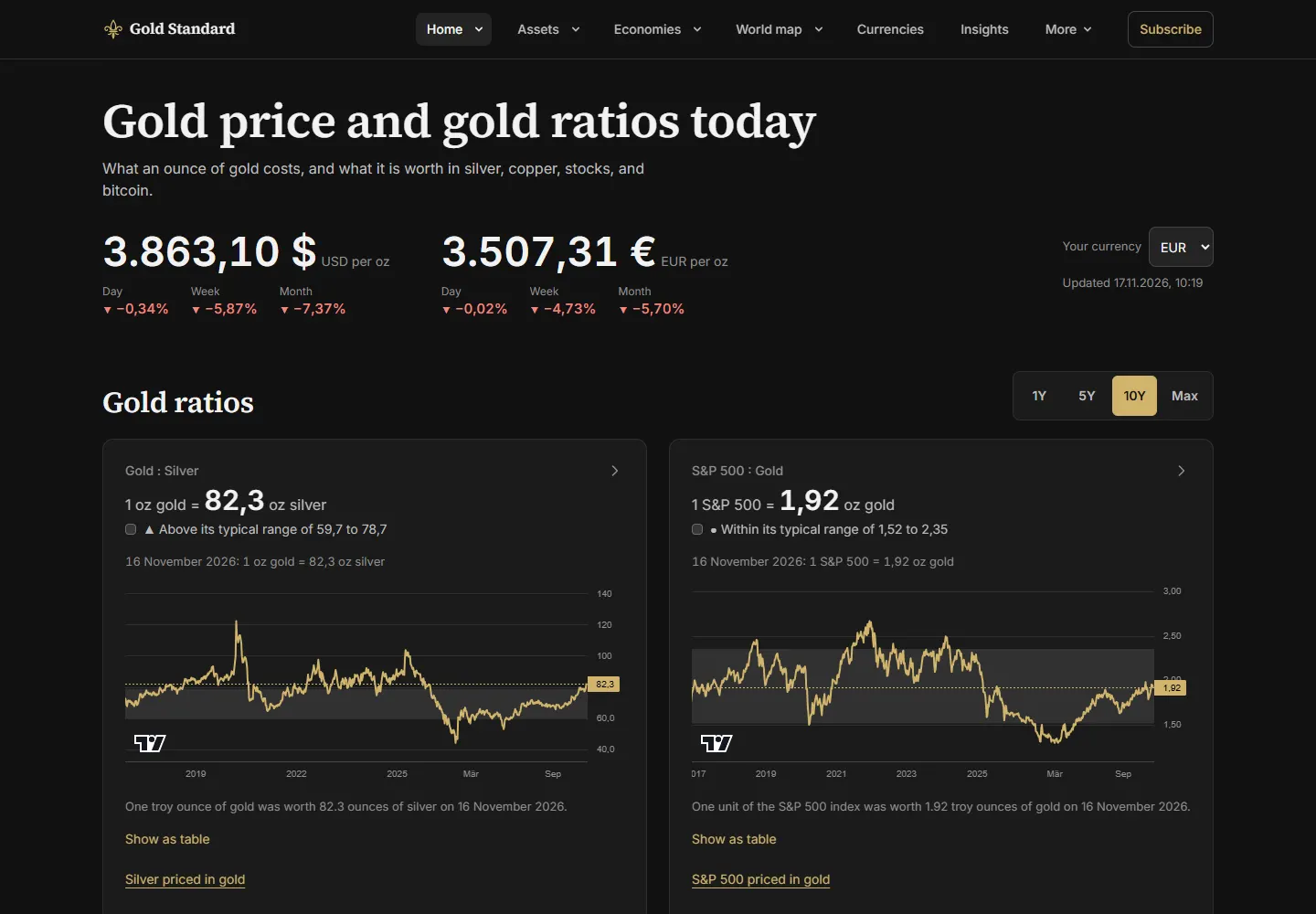
Home page of gold-standard.org: gold price per ounce in two currencies, the currency selector, the period selector, and the gold to silver and S&P 500 to gold ratios with their history.

Own product · Next.js

Gold Standard

Gold as the yardstick

Gold Standard measures stocks, currencies, and house prices in gold instead of dollars. Prices, ratios, and maps update continuously from public data sources.

  1. 1Live gold price in many currencies
  2. 2One currency setting for every value on the site
  3. 3Four ratios with history and typical range, over any period
  4. Data from the IMF, the World Bank, FRED, the BIS, the Turkish central bank, and others
  5. Structured datasets for search engines and AI assistants
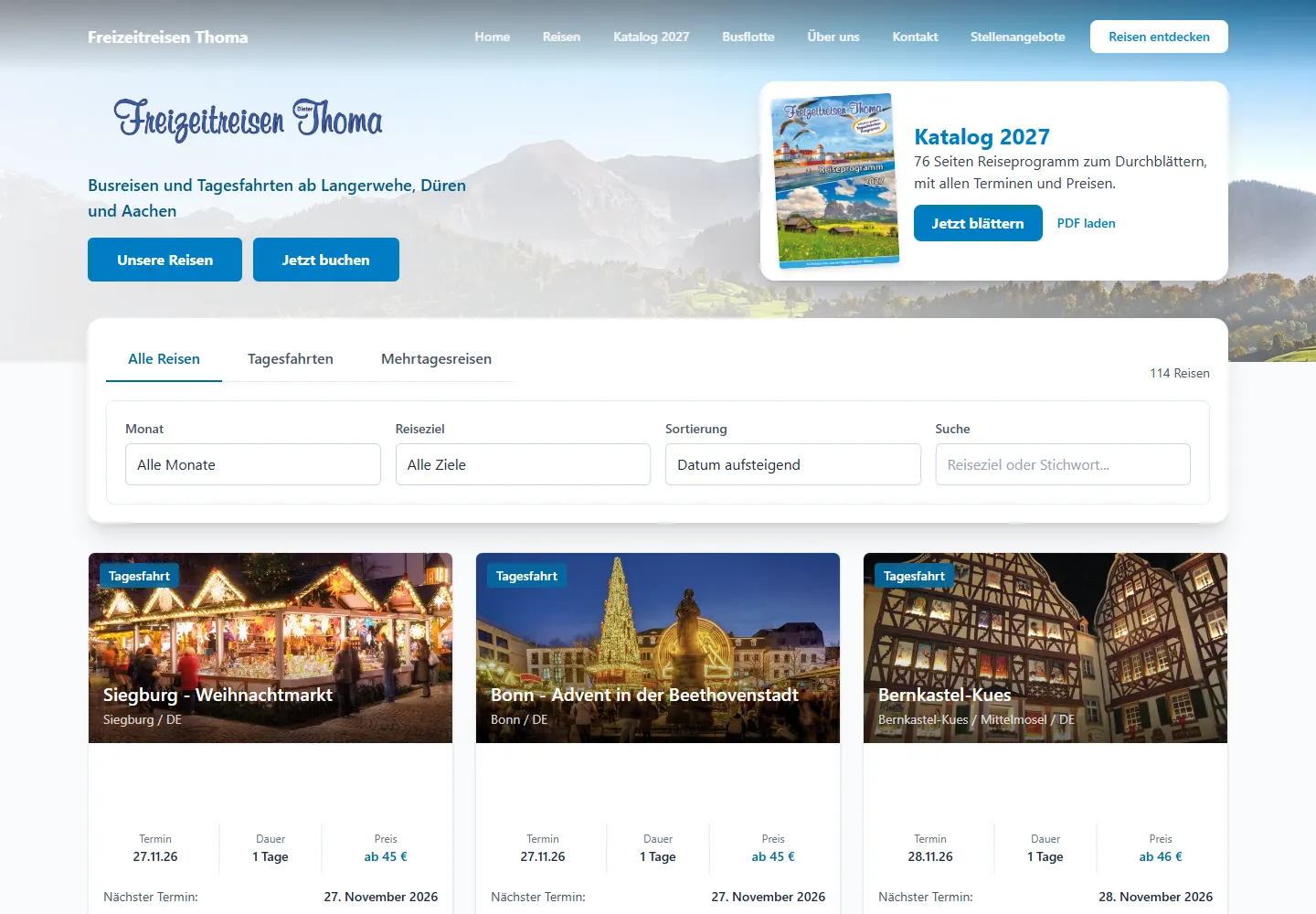
Home page of freizeitreisen-thoma.de: the catalog to browse at the top, below it filters for trip type, month, and destination and the first trips with date, duration, and price.

Client project · Next.js

Freizeitreisen Thoma

From travel catalog to website

Many tour operators publish their program mainly as a catalog. For Freizeitreisen Thoma we turned it into a data model: every trip has its own page and can be found by type, month, and destination.

  1. 1The catalog stays, to browse online and as a PDF
  2. 2Filters for trip type, month, and destination, plus free-text search
  3. 3Every trip with its date, duration, and price
  4. Structured data for each trip, so search engines can find it

All views and details

Typical starting points

The prototype is about to go live

The demo works. Before real users, payments, or customer data arrive, someone should check what's underneath.

Customers or investors ask about security

You're asked who can see which data and what happens in an outage, and you don't have a solid answer yet.

Every change breaks something else

The app keeps growing, but nobody understands the generated code well enough to change it safely.

What a finding looks like

Every finding states its severity, evidence, risk, and recommendation. Two extracts from our sample report:

Critical

Row-level security is off on the invoices table

Any signed-in user can read every customer's invoices. Recommendation: enable row-level security and test it with two accounts.

High

Service key in git history and in the browser bundle

Anyone who finds the key has administrator rights on the database. Recommendation: rotate the key and use it on the server only.

Read the whole sample report

Four building blocks

Every project starts with an audit. After that, you decide which building blocks we carry out.

Audit & triage

We review code, architecture, and operations, and tell you whether cleaning up or rebuilding makes more sense.

Security hardening

We test whether your app holds up when people use it in ways nobody planned: who can see and do what, how access and services are protected, and what misuse could cost.

Stabilization & refactoring

We fix bugs, remove duplication, bring order to the structure and data model, and write tests.

Production readiness & operations

Deployment, environments, monitoring, backups, and performance, so the app runs reliably day to day.

All services in detail

Stacks we work with

  • React, Next.js, and Node (TypeScript)
  • Supabase, Firebase, and Vercel
  • Python (FastAPI, Django, Streamlit)
  • C#/.NET, PHP (Laravel), and Azure

How it works

  1. Initial conversation
  2. Audit of fixed scope
  3. Findings report and decision
  4. Delivery in work packages
  5. Documented handover

You talk directly to the people who do the work. The audit has a fixed scope, not an open-ended hourly account. The findings are easy to follow, and we tell you plainly whether to clean up or rebuild.

More on how we work

What happens next?

Read a sample report, check your app yourself, or talk to us directly.